Canada Cancels 10-Year Multiple Entry Visas and Tightens Entry Rules (2026 Update)
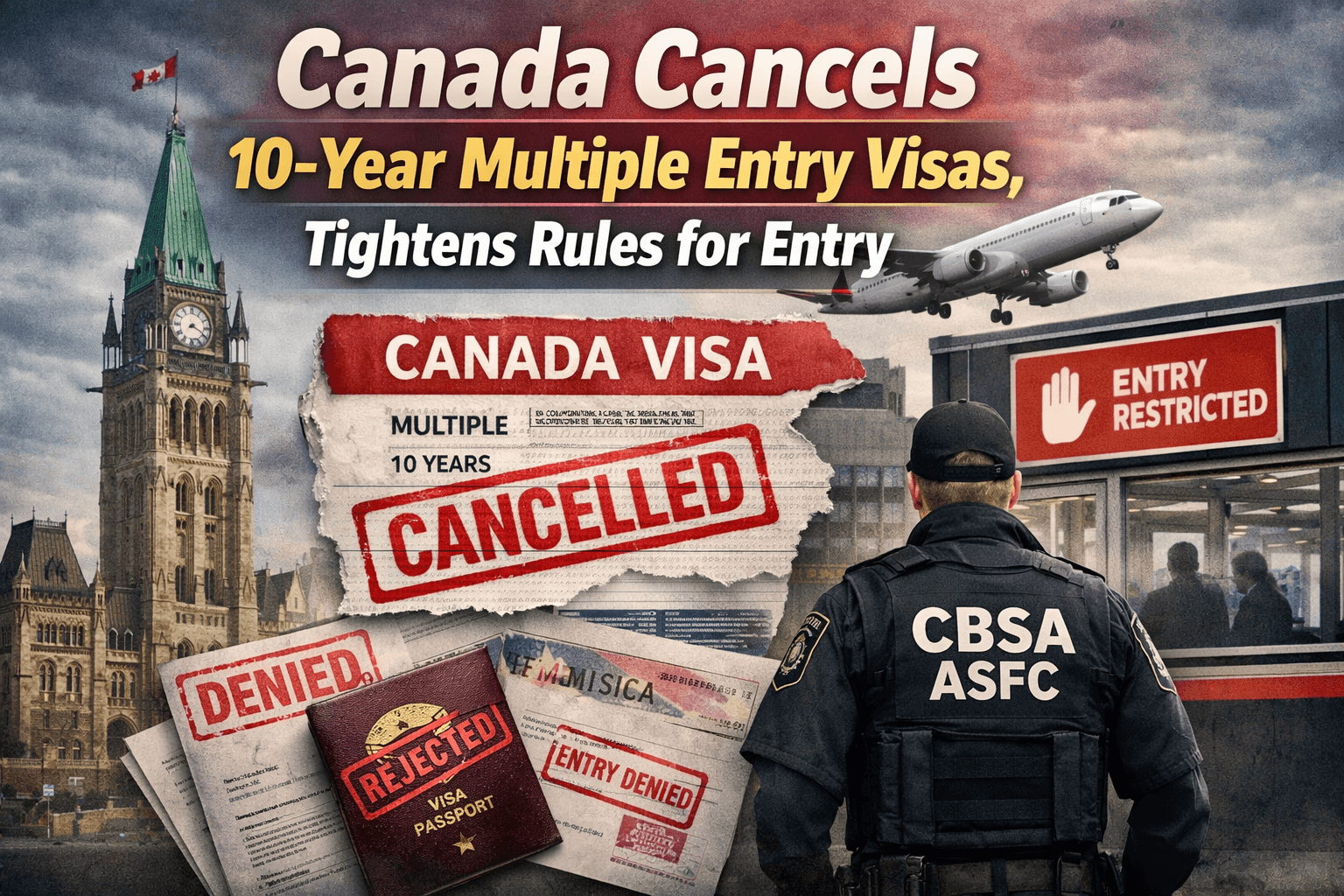
Canada has recently made major changes to its entry policies, including cancelling the 10-year multiple-entry visas and tightening requirements for foreign nationals wishing to visit, study, work, or transit through the country.
These changes are significant — especially for international students, skilled workers, tourists, and frequent visitors from countries that previously enjoyed long-term access. In this article, we break down why Canada made these changes, who is affected, and what you need to know before applying for a Canadian visa in 2026.
Why Canada Cancelled 10-Year Multiple Entry Visas
The 10-year multiple-entry visa allowed visitors to enter and leave Canada freely for 10 years, or until their passport expired. However, the Canadian government has now phased out this option as part of broader immigration and border security reforms.
According to official statements, the changes are designed to:
✔ Improve border security and national safety
✔ Ensure more accurate tracking of visitor activity
✔ Prevent misuse of long-term visas for unauthorised work or long stays
✔ Align visa policy with evolving global travel standards
These reforms reflect global trends, as several major destination countries have tightened visa access in response to security concerns and irregular migration.
Who Is Affected by the Cancellation of the 10-Year Visa?
The cancellation of the 10-year multiple-entry visa impacts:
1. Tourists and Visitors
Visitors from countries that previously qualified for long-term multiple-entry visas must now apply for shorter-term visitor visas or electronic travel authorisations (eTA) based on their nationality.
2. Frequent Business Travellers
Business visitors who regularly travel to Canada will now need to plan more carefully, as they may be issued single or multiple-entry visas with shorter validity than before.
3. International Students and Temporary Workers
While study and work permit holders are generally not issued 10-year visitor visas, those who previously held one for entry before their study or work permit may be affected when re-entering Canada.
What Are the New Entry Rules?
1. Shorter Validity Visitor Visas
Instead of a 10-year multiple-entry visa, applicants will now be given visas with reduced validity periods, depending on:
✔ Nationality
✔ Purpose of visit
✔ Immigration history
✔ Security screening outcomes
This means travellers may need to renew visas more frequently, even if they have never violated Canadian immigration rules.
2. Higher Security and Screening Standards
Canada’s new entry rules include:
🔹 Enhanced background checks
🔹 More stringent review of travel history
🔹 Verification of financial capacity
🔹 Stronger ties to home country requirements
These measures are intended to decrease risks associated with overstays and unauthorised employment.
3. Impact on Canadian Study and Work Permit Applicants
If you are applying for:
✔ A study permit,
✔ A work permit, or
✔ A temporary resident visa (TRV),
You should be aware that:
📌 Visa officers will take travel history and immigration compliance more seriously
📌 Proof of financial ability, academic intent, and return-home ties will be carefully evaluated
📌 Students must demonstrate strong academic purpose and clear plans
Stated differently, having a tourist visa is no longer a strong unofficial pathway for entry; applicants must comply with standard procedures and requirements.
What This Means for Nigerian and African Travellers
For many Nigerian or African passport holders, the cancellation of long-term visas means new planning is required:
⭐ Apply early and with complete documentation
⭐ Provide solid financial proof
⭐ Submit clear travel intentions
⭐ Avoid overstaying or violating any terms of stay
These changes might initially feel stricter, but they are part of Canada’s broader efforts to standardise entry protocols and strengthen border integrity.
5 Key Takeaways You Need to Know in 2026
✔ 10-year multiple entry visas are no longer offered by Canada.
✔ Visitor visas now have shorter validity and stricter screening.
✔ Security checks and travel history matter more than ever.
✔ Study and work permit applicants must provide full documentation and intent.
✔ Frequent travellers may need to renew visas more often.
How to Stay Prepared and Compliant
If you plan to travel to Canada in 2026 for:
📍 Tourism
📍 Study (study permit)
📍 Work (work permit)
📍 Business or family visits
You should:
✔ Understand the specific visa category and requirements
✔ Apply with accurate supporting documentation
✔ Show proof of funds, intentions, and ties to your home country
✔ Work with qualified advisory support if needed
Final Thoughts
Canada’s decision to cancel 10-year multiple-entry visas and tighten entry rules marks a significant shift in immigration and visitor policy. While it may require more planning and stricter compliance, these changes are intended to enhance Canada’s border security and immigration integrity.
If you are planning to visit, study, or work in Canada in 2026, the best approach is to stay informed, prepare early, and apply with confidence.
Need Help with a Canadian Visa in 2026?
We offer expert visa support for:
Study applications
Visitor visa preparation
Documentation review
Reapplication
📩 Contact us for personalised assistance
📲 Reach out on WhatsApp for immediate support
Your journey to Canada starts with the right visa strategy. Let’s help you get it right.
Tags
Need Help or Have Questions?
Our team at Flyibat Travels is here to assist you. Get in touch and let us help you with your needs.
Available Monday - Friday, 8:00 AM - 5:00 PM